Technology is intended to be a resource for productivity. Unfortunately, malicious actors use those same advancements to create deepfakes. We have entered a period where visual and auditory information during business calls is no longer inherently trustworthy. These tools are being used to bypass security protocols and access corporate funds.
Artificial Intelligence has taken up a reputation as the ultimate productivity booster, but it has also introduced a new layer to the phenomenon known as shadow IT… shadow AI. This occurs when employees use unauthorized, public AI tools to summarize meeting notes, write code, or analyze spreadsheets.
While their intentions are good, these employees (and yes, occasionally business leadership) often unknowingly upload proprietary company information to a public database they have no control over.
For years, the cybersecurity industry has coasted on the perception that zero-day vulnerabilities (bugs in software that the developers were not yet aware of) were not easy to find… but on April 6th, 2026, this perception shifted completely as Anthropic’s Claude Mythos AI model proved it very, very wrong.
Today’s threats are no longer the bugs we know about. They’re the thousands of previously unknown vulnerabilities that AI can identify (and weaponize) in mere moments.
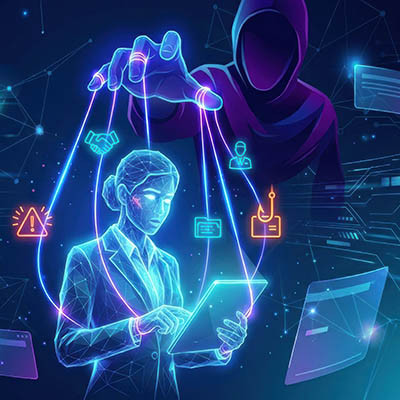
Imagine one of your employees receives a phone call from someone who sounds exactly like you. They have your cadence, your "ums," and even that specific way you clear your throat before getting down to business. Would they be able to tell it’s a deepfake, or would they follow the instructions to urgently reset a password or move funds?
If you can’t answer that with an emphatic "yes," you’ve got some work to do. We’ve moved far beyond the era of the Nigerian Prince emails and obvious typos. We are now in the age of highly polished, AI-driven social engineering where the "bad guys" are using your own identity against your team.
It might sound crazy, but sometimes I miss the Nigerian Prince. Back in the day, the threats were almost charming in their incompetence. You had the broken English, the bizarre formatting, and the royal promises that were so obviously fake they were almost funny. If you had even a shred of common sense, you were safe.
But those days are gone.
The mobile device is deeply ingrained in modern life, society, and culture, so it will be present in the workplace. This can be a very useful thing… with the right preparations, your employees can become a lot more mobile in terms of their potential productivity.
However, mobile work isn’t without its dangers. Perhaps the most obvious risk is that a device will be lost, whether it's left behind in a rideshare or pilfered as a latte is retrieved from the barista. Either way, your business will have suffered a data breach.
Let’s talk about how this outcome can be avoided with some proactive planning, thanks to mobile device management.
Let’s say that today was the day a cyberattack successfully infiltrated your business network. Not good, but if you have a proper data backup, you should be safe… unless the party responsible prioritizes deleting your backup files.
While we would never recommend a business skip the data backup process, it is important to recognize that traditional backups have this critical vulnerability. To remedy this, we do recommend implementing immutable backups.
With automated threats on the rise and taking over the cyberthreat landscape, you need as many ways to stay safe online as possible. Naturally, one of the most talked about topics is login security. There’s a lot of good password advice out there, but the most helpful piece isn’t repeated often enough: just make it longer.
When the time comes to upgrade any of your business tech, it makes sense that most of your attention would be on maximizing the value you get out of your new hardware. However, it is critical that you also continue to think about your discarded hardware… specifically, the data it contains.
In short, deleting files simply isn’t enough. You need to be confident that any information is truly purged or physically destroyed when you’re replacing your hardware.
Modern gadgets make running a business easier. From smart thermostats and lightbulbs to connected coffee machines, the Internet of Things (IoT) brings a lot of convenience to the workplace. However, because these devices are built for speed and low cost, they often skip the security features your business actually needs.
Essentially every smart device in your office is a potential digital back door for hackers. Let’s take a look at how IoT—as helpful as it can be—can also be a big problem.
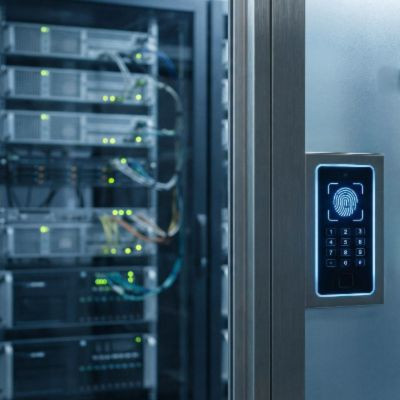
Are you unknowingly leaving important data out in plain sight? Too many businesses will implement incredibly powerful security solutions only to ignore the basics of physical security. It’s time to address the hidden vulnerabilities that patches and updates won’t solve by scrutinizing your physical infrastructure.
Even if you’re doing everything right, business cybersecurity is a challenge. Mistakes are common. Passwords are forgotten, and physical buttons can go missing. That said, there is one form of authentication that you can’t help but have with you: yourself.
Biometrics have been experiencing a surge in popularity as a means of authentication. Let’s explore why that is.
For literal decades, we heard that a good password required a few key traits to be secure: a capital letter, a number, and eight characters. How times have changed, right?
Now, the baseline standards are similar… just multiplied to the nth degree. Let’s discuss why this is, what modern businesses now need to do, and how we can help to maintain password security moving forward.
Sometimes the toughest lessons that hurt the most are the ones we need the most, as is the case with anything cybersecurity related. You don’t want to experience a data breach, regardless of how it’s caused, but preventing them is a bit more challenging than you might at first expect. If you want to avoid losing time, money, and reputation needlessly, then take these three cybersecurity lessons into consideration today.
One of the biggest myths out there related to cybersecurity is that criminals only go after the big enterprises. Why should they care about your small operation, anyway? In reality, cybercriminals love to attack small businesses to take advantage of their weaker security infrastructures. If you’re not careful, this could lead to serious losses for your business stemming from a loss of trust, legal fees, and operational downtime.
One of the inevitabilities of starting and operating a successful business is that your IT infrastructure will eventually outgrow itself. While you might have been able to start operations with just a couple of people, the same network that used to work just fine is likely bowing under the stress of additional employees and workstations. If you want to build a sustainable and reliable infrastructure, it’s best that you rely on experts who can help your company stay as competitive as possible, regardless of how much you grow.
In IT services, we often use the iceberg analogy to describe the Internet. The Surface Web, the sites you browse daily, is just the 10 percent visible above the waterline. Below that lies the Deep Web, and at the murky bottom is the Dark Web.
For a business owner, the Dark Web isn’t just a concept from a spy movie; it is a sophisticated, unregulated marketplace where your company’s data is the primary commodity (and target). If your information is down there, it’s not a matter of if someone will use it, but when.